
In today’s high-performance corporate environment, professionals are expected to deliver results consistently while managing increasing levels of stress, complexity, and responsibility. However, sustainable success requires more than productivity—it demands clarity, balance, and structured thinking.
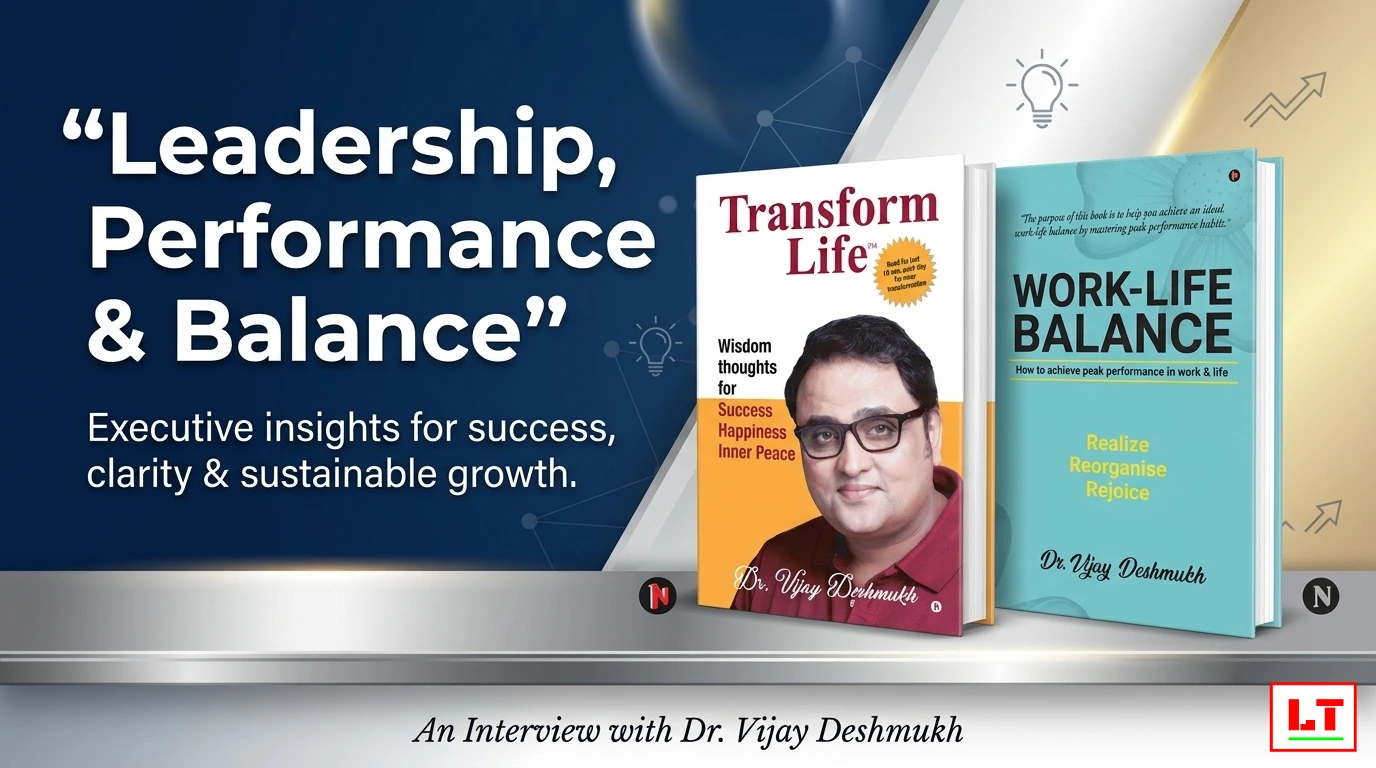
Dr. Vijay Deshmukh brings a unique perspective to this challenge through his books Transform Life: Wisdom Thoughts for Success, Happiness & Inner Peace and Work Life Balance: How to Achieve Peak Performance in Work and Life. His approach integrates principles aligned with the Bhagavad Gita with modern frameworks of performance, decision-making, and mental discipline.
This interview explores his views on leadership effectiveness, stress management, and building a high-performance mindset in a structured and practical manner.
📘 Recommended Reading for Professionals
For leaders, managers, and professionals seeking structured growth:
👉 Transform Life: Wisdom Thoughts for Success Happiness Inner Peace – Order Here
👉 Work Life Balance: How to Achieve Peak Performance in Work and Life – Order Here
🎤 Executive Interview with Dr. Vijay Deshmukh
Q1. What leadership gaps do you commonly observe in today’s corporate professionals?
Answer by Dr. Vijay Deshmukh:
One of the most common gaps I observe is the lack of internal clarity. Many professionals are highly skilled but operate without a clear understanding of their priorities and purpose. This leads to reactive decision-making and increased stress. Another gap is the inability to manage emotional responses under pressure. Leadership today requires not only technical expertise but also mental stability, self-awareness, and the ability to think strategically in complex situations.
Q2. How can professionals redefine success beyond traditional metrics?
Answer by Dr. Vijay Deshmukh:
Success needs to be redefined as a balanced outcome rather than a singular achievement. While financial growth and career advancement are important, they should not come at the cost of mental well-being or personal relationships. A sustainable definition of success includes clarity of thought, emotional stability, and the ability to maintain consistency in performance without burnout. When these elements are aligned, professionals can achieve long-term effectiveness rather than short-term gains.
Q3. Your book “Transform Life” emphasizes self-unfoldment. How is this relevant in a corporate setting?
Answer by Dr. Vijay Deshmukh:
Self-unfoldment in a corporate context refers to understanding one’s strengths, limitations, and behavioral patterns. When professionals develop this awareness, they make better decisions, communicate more effectively, and handle challenges with composure. The principles discussed in the book—such as meditation, structured thinking, and positive mindset—help individuals build a strong internal framework, which directly enhances their external performance.
Q4. Stress is often seen as unavoidable in corporate life. How should professionals approach it?
Answer by Dr. Vijay Deshmukh:
Stress is not entirely avoidable, but it is manageable with the right approach. The key is to shift from reactive stress management to proactive planning. Professionals must learn to organize their responsibilities into defined segments and prioritize effectively. Additionally, practices like mindfulness and controlled thinking help reduce unnecessary mental pressure. When the mind is trained, stress becomes a manageable variable rather than a constant burden.
Q5. What role does structured thinking play in achieving peak performance?
Answer by Dr. Vijay Deshmukh:
Structured thinking is fundamental to peak performance. Without it, individuals tend to multitask inefficiently and lose focus. By organizing tasks into clear categories—such as professional, personal, and strategic priorities—one can allocate time and energy more effectively. This reduces decision fatigue and improves productivity. Structured thinking also enables professionals to anticipate challenges and respond with clarity rather than confusion.
Q6. How can organizations benefit from employees practicing meditation and mindfulness?
Answer by Dr. Vijay Deshmukh:
Organizations benefit significantly when employees develop mental clarity and emotional stability. Meditation improves focus, reduces stress, and enhances decision-making capabilities. Employees who practice mindfulness are more composed, productive, and collaborative. This leads to better team dynamics and improved organizational outcomes. From a business perspective, investing in mental well-being directly contributes to performance and efficiency.
Q7. What is the biggest mistake professionals make while trying to achieve work-life balance?
Answer by Dr. Vijay Deshmukh:
The biggest mistake is treating work-life balance as a reactive adjustment rather than a planned strategy. Many individuals attempt to compensate for imbalance only after experiencing burnout. Instead, balance should be built into daily routines through conscious time allocation. Each aspect of life—professional, personal, and social—must be given appropriate attention. When this is done consistently, balance becomes sustainable rather than temporary.
Q8. How does your “time zone” concept improve productivity?
Answer by Dr. Vijay Deshmukh:
The concept of managing different time zones—such as professional, family, personal, and spiritual—ensures that no single area dominates the others. By compartmentalizing time, individuals can focus fully on the task at hand without distraction. This improves efficiency and reduces mental clutter. Over time, this approach leads to better energy management and higher overall productivity.
Q9. What mindset shifts are required for long-term professional success?
Answer by Dr. Vijay Deshmukh:
Professionals need to shift from short-term achievement thinking to long-term value creation. This involves focusing on consistency, discipline, and continuous improvement. Another important shift is from external validation to internal satisfaction. When individuals are driven by purpose rather than pressure, their performance becomes more stable and meaningful. Developing resilience and adaptability is also critical in today’s dynamic environment.
Q10. What advice would you give to leaders aiming to build high-performance teams?
Answer by Dr. Vijay Deshmukh:
Leaders must first develop their own clarity and stability before guiding others. A high-performance team is built on trust, clear communication, and shared purpose. Leaders should encourage structured thinking, promote mental well-being, and create an environment where individuals can perform without excessive pressure. When team members feel balanced and supported, their productivity and innovation naturally increase.
🚀 Action Step for Professionals
If you are looking to:
- Improve decision-making clarity
- Manage stress effectively
- Achieve consistent peak performance
- Build a balanced and sustainable career
These books provide a structured and practical framework.
👉 Transform Life: Wisdom Thoughts for Success Happiness Inner Peace – Get Your Copy
👉 Work Life Balance: How to Achieve Peak Performance in Work and Life – Get Your Copy
Final Reflection
Dr. Vijay Deshmukh presents a structured and practical approach to modern challenges faced by professionals. His insights emphasize that sustainable success is not achieved through intensity alone, but through clarity, balance, and disciplined thinking.
For organizations and individuals alike, the key takeaway is clear:
👉 High performance is not just about working harder—it is about working with clarity, balance, and purpose.
