
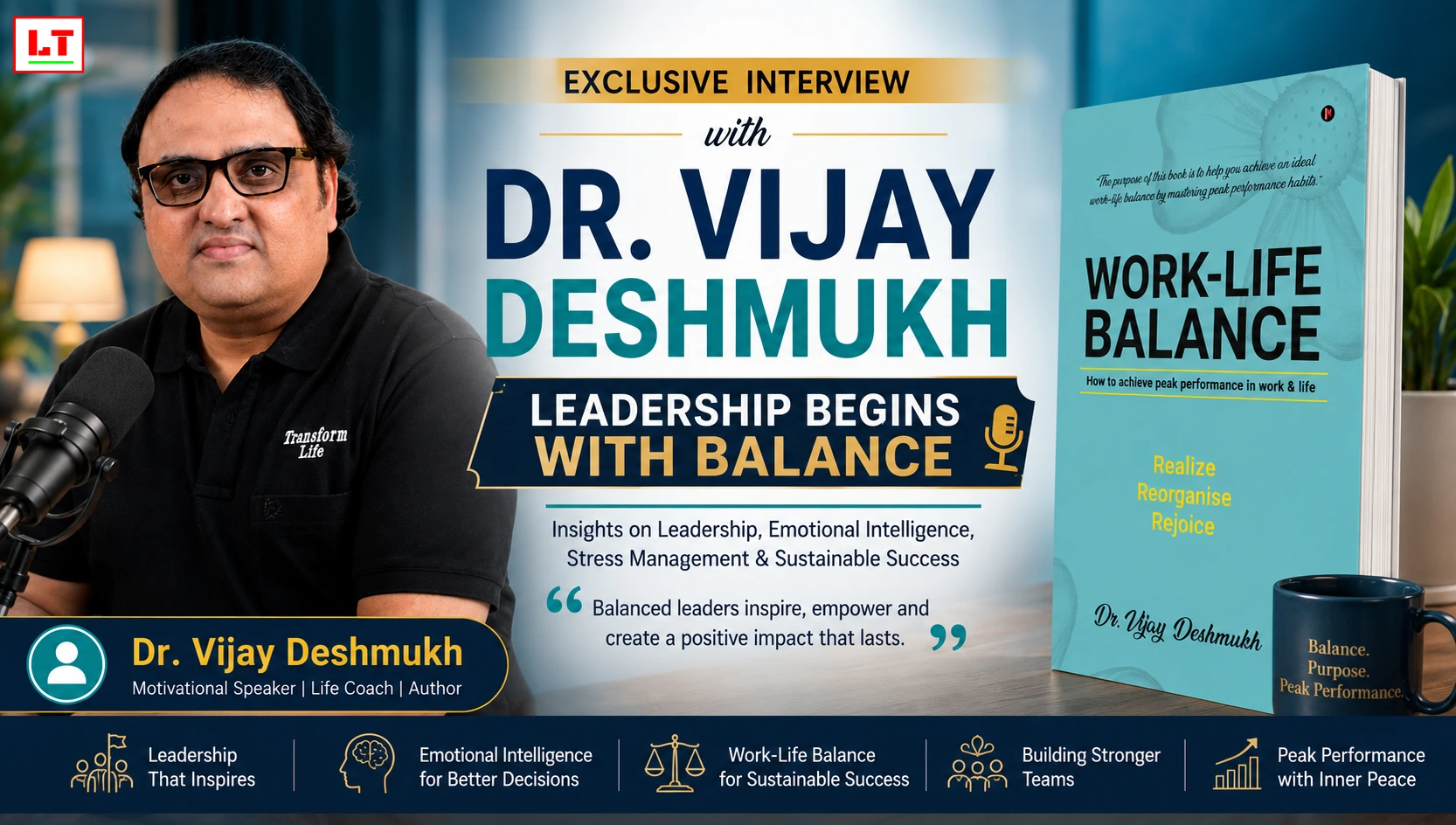
Leadership today is no longer defined solely by authority, titles, or years of experience. Organizations are increasingly looking for leaders who can inspire teams, remain composed during uncertainty, make thoughtful decisions, and create a culture of trust and collaboration.
However, effective leadership begins long before someone receives a managerial designation. It starts with leading oneself—managing emotions, balancing priorities, developing discipline, and maintaining clarity under pressure.
In this exclusive interview, Dr. Vijay Deshmukh, renowned motivational speaker, life coach, and author of Work Life Balance: How to Achieve Peak Performance in Work and Life, shares his perspectives on leadership, stress management, emotional intelligence, and sustainable professional growth.
Drawing from decades of observing people, mentoring professionals, and helping individuals transform their lives, Dr. Deshmukh explains why the best leaders first learn to balance themselves before leading others.
📘 Featured Book
Work Life Balance: How to Achieve Peak Performance in Work and Life
🎤 Exclusive Interview
Q1. Many people believe leadership starts after becoming a manager. Do you agree?
Answer by Dr. Vijay Deshmukh:
Leadership begins much earlier than a job title. Before leading a team, every individual must first learn to lead their own mind, emotions, habits, and priorities. A person who cannot manage stress, emotions, or personal discipline will find it difficult to inspire others. Real leadership starts with self-awareness, responsibility, and consistency. When individuals learn to manage themselves effectively, leadership becomes a natural extension of their personality rather than a position they hold.
Q2. Why do so many successful professionals struggle with work-life balance?
Answer by Dr. Vijay Deshmukh:
Many professionals associate success with continuous work and constant availability. They become so focused on career growth that they unintentionally neglect health, family, relationships, and personal well-being. Initially, this may appear productive, but over time it creates emotional exhaustion and dissatisfaction. Sustainable success requires balance across different dimensions of life. Professional excellence becomes far more meaningful when supported by physical health, emotional stability, and fulfilling personal relationships.
Q3. How important is emotional intelligence for modern leaders?
Answer by Dr. Vijay Deshmukh:
Emotional intelligence has become one of the most valuable leadership qualities. A leader interacts with different personalities, resolves conflicts, motivates teams, and makes decisions during uncertainty. Without emotional intelligence, technical expertise alone cannot create effective leadership. Leaders who understand their own emotions and empathize with others build stronger trust, improve communication, and create positive workplace cultures where people perform at their best.
Q4. What qualities distinguish exceptional leaders from average managers?
Answer by Dr. Vijay Deshmukh:
Exceptional leaders focus on people before processes. They communicate clearly, remain calm during challenges, and continuously learn from every experience. They listen carefully before making decisions and encourage collaboration rather than control. Most importantly, they maintain integrity and consistency. Employees naturally trust leaders whose actions match their words. Leadership is earned through character rather than authority.
Q5. Stress has become common in workplaces. How should leaders respond to stressful situations?
Answer by Dr. Vijay Deshmukh:
Stress is unavoidable, but panic is optional. Effective leaders understand that every challenge requires clarity rather than emotional reaction. Instead of spreading anxiety throughout the team, they remain composed, analyze situations carefully, and communicate with confidence. Calm leadership creates psychological safety, allowing teams to focus on solutions rather than problems. A peaceful mind always makes better decisions than a stressed one.
Q6. Your book discusses balancing different areas of life. Why is this important for leadership?
Answer by Dr. Vijay Deshmukh:
Leadership does not exist only inside the office. The way we manage our family life, health, social relationships, and personal growth directly influences our professional effectiveness. My “Flower of Life” philosophy explains that life consists of multiple interconnected dimensions. Ignoring one area eventually affects the others. Balanced leaders possess greater emotional stability, better judgment, and stronger resilience because they nurture every important aspect of life.
Q7. What advice would you give young professionals who aspire to become future leaders?
Answer by Dr. Vijay Deshmukh:
Young professionals should invest in developing character before chasing positions. Build discipline, maintain honesty, improve communication skills, and never stop learning. Leadership opportunities naturally come to individuals who consistently deliver value while treating others with respect. Instead of competing with everyone around you, compete with the person you were yesterday. Continuous self-improvement creates lasting leadership.
Q8. How can professionals make better decisions under pressure?
Answer by Dr. Vijay Deshmukh:
Good decisions require a calm and organized mind. When emotions dominate thinking, judgment becomes clouded. I encourage professionals to pause, analyze facts objectively, and avoid making important decisions while emotionally disturbed. Meditation, self-reflection, and structured thinking improve clarity over time. The more peaceful the mind, the better the quality of decisions.
Q9. What role does continuous learning play in long-term success?
Answer by Dr. Vijay Deshmukh:
Learning should never stop after formal education. Every experience, conversation, success, and failure teaches valuable lessons. Reading meaningful books, reflecting regularly, and remaining curious help professionals adapt to changing environments. Continuous learning not only improves knowledge but also strengthens humility and wisdom—qualities that every successful leader needs throughout life.
Q10. What is the most important message you hope readers take from Work Life Balance?
Answer by Dr. Vijay Deshmukh:
The central message of the book is that success and happiness should never be treated as separate goals. A fulfilling life is one where professional achievement, emotional well-being, meaningful relationships, and inner peace grow together. My hope is that readers begin viewing success as a balanced journey rather than a race. When the mind is clear and life is balanced, extraordinary performance becomes sustainable and meaningful.
Leadership Lessons from the Interview
Throughout this conversation, several important leadership principles emerge:
- Leadership begins with self-management.
- Emotional intelligence is as valuable as technical knowledge.
- Balance improves decision-making.
- Stress should be managed, not ignored.
- Continuous learning creates long-term success.
- Character is the true foundation of leadership.
- Sustainable success includes both achievement and happiness.
These insights apply not only to senior executives but to anyone who wants to become a better professional and a more effective leader.
Why Work Life Balance Is Relevant for Today’s Leaders
Modern workplaces demand more than technical expertise. Organizations seek professionals who can lead teams, communicate effectively, adapt to change, and maintain emotional stability under pressure.
Work Life Balance: How to Achieve Peak Performance in Work and Life offers practical guidance for developing these essential qualities. Through relatable examples, structured thinking, and actionable lessons, the book encourages readers to build careers without compromising health, relationships, or peace of mind.
Whether you are an aspiring manager, an experienced executive, or an entrepreneur, the book provides timeless principles that remain relevant in today’s fast-changing professional environment.
📘 Recommended Book
If you want to improve your leadership skills while creating a healthier and more balanced life, this book is an excellent resource.
📖 Work Life Balance: How to Achieve Peak Performance in Work and Life
Final Reflection
Leadership is not measured only by business results or professional achievements. It is reflected in how we respond to challenges, support others, maintain integrity, and balance the different dimensions of our lives.
The insights shared by Dr. Vijay Deshmukh remind us that the strongest leaders are not those who work endlessly—they are those who think clearly, act with purpose, inspire confidence, and maintain inner stability even during difficult times. When balance becomes a priority, leadership becomes more authentic, sustainable, and impactful.
Inspiring Authors.
Fresh Perspectives.
Discover remarkable books, inspiring author stories, exclusive literary insights and fresh ideas delivered directly to your inbox.
