
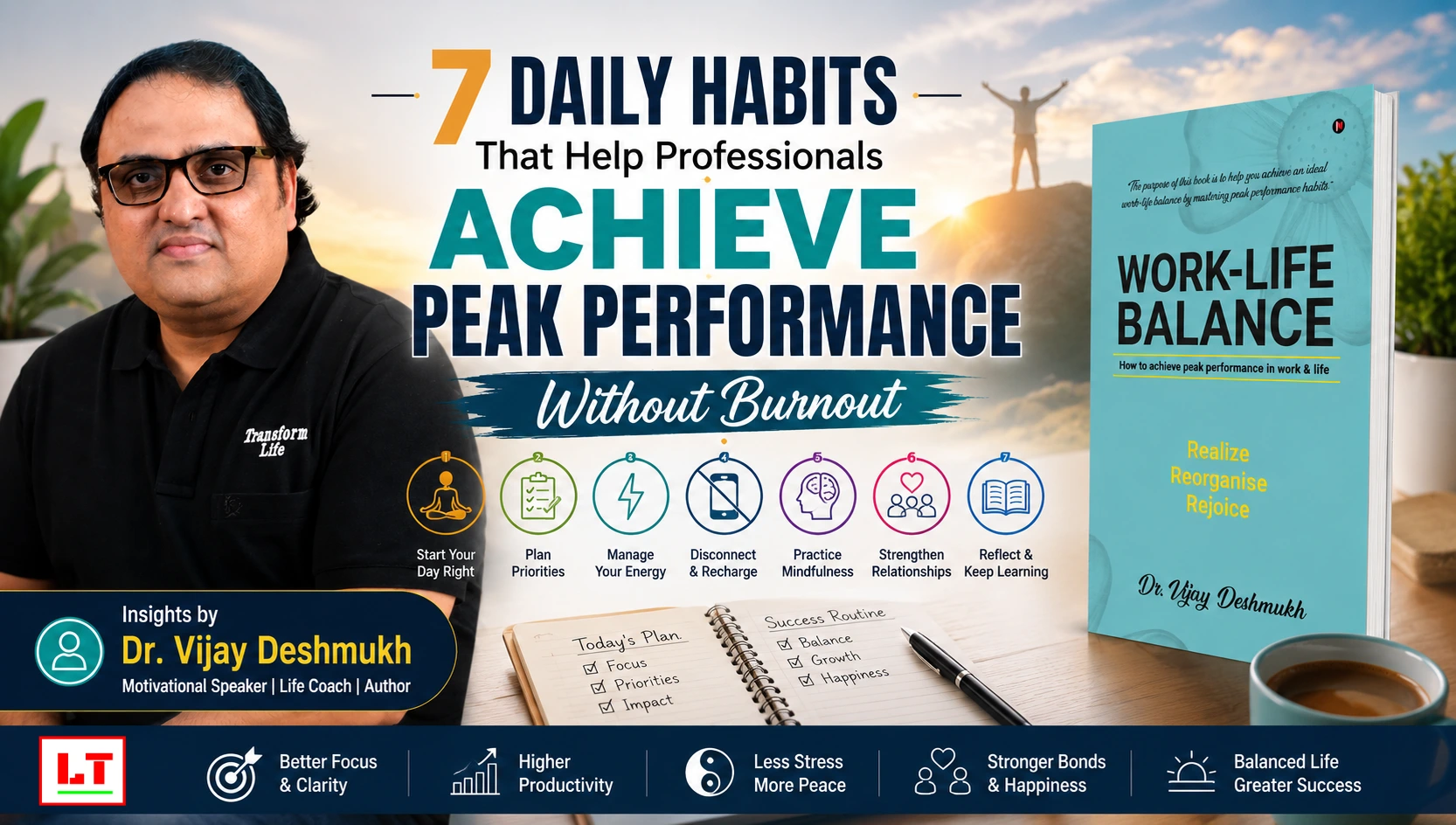
Today’s professionals are expected to accomplish more than ever before. Tight deadlines, increasing competition, hybrid work environments, digital distractions, and growing responsibilities have made work both exciting and challenging. While many people strive for excellence, they often overlook one important truth—peak performance is not achieved by working harder but by working smarter and living in balance.
Many professionals assume that success demands long working hours, constant availability, and sacrificing personal time. However, this approach frequently leads to stress, declining productivity, strained relationships, and eventually burnout. True high performance is built on consistent habits that improve both professional efficiency and personal well-being.
These practical principles are explored in Work Life Balance: How to Achieve Peak Performance in Work and Life by Dr. Vijay Deshmukh. Through relatable storytelling and actionable guidance, the book demonstrates how balanced living can help individuals achieve extraordinary success while maintaining happiness and inner peace. Let’s explore seven daily habits that can significantly improve productivity without leading to burnout.
1. Start Your Day with Mental Preparation
The first few minutes of the day often determine the quality of the remaining hours. Many people begin their mornings by immediately checking emails, social media, or office messages. This habit fills the mind with stress before the day has even started. Instead, dedicate the first 15–20 minutes to preparing your mind.
You can:
- Practice deep breathing or meditation.
- Review your daily goals.
- Visualize a successful day.
- Read a few pages from an inspiring book.
- Express gratitude for the opportunities ahead.
Beginning the day with clarity rather than chaos creates a calm and focused mindset. Dr. Vijay Deshmukh emphasizes that mental preparation is just as important as professional preparation.
2. Plan Priorities Instead of Simply Managing Time
Many professionals create long to-do lists but still end the day feeling unproductive. The problem is not always time—it is priorities. Rather than trying to complete everything, identify the three most important tasks that will create the greatest impact.
Ask yourself:
- What absolutely must be completed today?
- Which activities create long-term value?
- What can be delegated or postponed?
Planning priorities reduces decision fatigue and improves focus throughout the day. This simple habit also minimizes unnecessary stress.
3. Manage Your Energy, Not Just Your Schedule
Most productivity advice focuses on time management. However, energy management is equally important. Working continuously without breaks gradually reduces concentration and creativity. To maintain high performance:
- Take short breaks every 60–90 minutes.
- Stay hydrated.
- Stretch or walk briefly.
- Avoid multitasking.
- Schedule demanding work during your highest-energy hours.
Professionals who protect their energy consistently produce better results than those who simply work longer hours. The book reminds readers that sustainable performance depends on maintaining both physical and mental freshness.
4. Learn to Disconnect from Work
One of the biggest challenges of modern life is that work often follows us everywhere. Smartphones, messaging apps, and remote work have blurred the boundaries between professional and personal life. Without clear boundaries, stress accumulates continuously. Develop a habit of intentionally disconnecting after work.
This may include:
- Turning off work notifications.
- Avoiding unnecessary emails after office hours.
- Spending quality time with family.
- Pursuing hobbies.
- Reading or exercising.
Creating mental separation between work and personal life improves emotional recovery and prevents burnout.
5. Practice Mindfulness During Stressful Moments
Stress itself is not always harmful. The real challenge is how we respond to stressful situations. Mindfulness helps professionals pause before reacting emotionally. Instead of immediately responding to criticism or unexpected challenges:
- Take a deep breath.
- Observe your thoughts.
- Focus on finding solutions.
- Respond calmly rather than emotionally.
This simple habit improves communication, leadership, and decision-making. Professionals who remain calm under pressure naturally gain greater trust and respect.
6. Strengthen Relationships Every Day
Career success becomes far more meaningful when supported by healthy personal relationships. Unfortunately, many professionals unintentionally neglect family and friends because of demanding work schedules. The book repeatedly highlights the importance of balancing professional life with family, social, and personal responsibilities.
Simple daily actions can make a significant difference:
- Have dinner together.
- Listen attentively during conversations.
- Appreciate family members.
- Spend uninterrupted quality time.
- Stay connected with close friends.
Strong relationships provide emotional stability, motivation, and resilience during challenging times.
7. End Every Day with Reflection and Learning
High performers continuously improve because they regularly evaluate themselves. Spend a few minutes each evening reflecting on your day.
Ask yourself:
- What went well today?
- What could have been handled better?
- What did I learn?
- What should I improve tomorrow?
Daily reflection builds self-awareness and encourages continuous growth. Reading even a few pages from an insightful book before sleeping can also strengthen your mindset over time. Personal growth happens gradually through consistent learning rather than occasional bursts of motivation.
Why These Habits Work Together
Each habit is valuable individually, but their real strength lies in how they complement one another. Morning preparation creates clarity. Planning priorities improves focus. Energy management prevents exhaustion.
Work boundaries reduce emotional overload. Mindfulness improves emotional intelligence. Healthy relationships strengthen emotional well-being. Reflection supports continuous improvement. Together, these habits create a balanced lifestyle where productivity and happiness reinforce one another instead of competing.
Lessons from Work Life Balance
One of the greatest strengths of Dr. Vijay Deshmukh’s book is that it goes beyond productivity advice. It encourages readers to rethink the meaning of success. Instead of measuring achievement only through promotions or financial growth, the book highlights the importance of:
- Inner peace
- Mental clarity
- Healthy relationships
- Emotional stability
- Sustainable productivity
Its unique “Flower of Life” philosophy reminds readers that professional life is only one part of a meaningful and successful life. Balancing different dimensions—including personal, family, social, and spiritual life—creates long-term fulfillment.
Who Should Read This Book?
This book is ideal for:
- Corporate professionals
- Managers and executives
- Entrepreneurs
- Business owners
- Working couples
- Young professionals
- Students preparing for careers
- Anyone experiencing workplace stress or burnout
Whether you are beginning your career or leading a large organization, the practical lessons in this book remain highly relevant.
📘 Recommended Book
If you’re looking to improve productivity while maintaining peace of mind, this book offers practical guidance that can be implemented immediately.
📖 Work Life Balance: How to Achieve Peak Performance in Work and Life
Conclusion
Peak performance is not the result of working endlessly. It is the outcome of developing the right habits consistently. Professionals who prepare their minds, manage priorities, protect their energy, maintain healthy relationships, and practice daily reflection naturally perform better over the long term.
As explained in Work Life Balance, success becomes truly meaningful when it is accompanied by health, happiness, emotional stability, and inner peace. Rather than chasing temporary productivity, invest in habits that support sustainable growth. Over time, these small daily practices will transform not only your professional performance but also the quality of your life.
Frequently Asked Questions (FAQs)
What are the most effective daily habits for improving productivity?
Planning priorities, managing energy, practicing mindfulness, maintaining healthy routines, and reflecting daily are among the most effective habits.
How can professionals avoid burnout?
By maintaining work-life balance, setting clear work boundaries, taking regular breaks, practicing mindfulness, and prioritizing physical and mental well-being.
Is Work Life Balance suitable for business leaders and managers?
Yes. The book provides practical guidance for professionals, entrepreneurs, managers, and leaders who want to improve productivity while reducing stress.
Why are consistent habits more important than motivation?
Motivation can fluctuate, but consistent habits create sustainable progress. Small daily improvements lead to long-term personal and professional success.
Inspiring Authors.
Fresh Perspectives.
Discover remarkable books, inspiring author stories, exclusive literary insights and fresh ideas delivered directly to your inbox.
