
Transformation often begins long before the outside world notices any change.
A new job, a better financial situation, improved relationships, or a major life achievement may appear to be the beginning of transformation. In reality, these external changes are often the result of something that happened much earlier—the way a person started thinking.
Our thoughts influence our emotions. Our emotions influence our actions. Repeated actions gradually become habits, and habits eventually shape the direction of our lives. This is why changing the way we think can become one of the most powerful steps toward personal transformation. For anyone interested in self-development, happiness, success, and inner peace, the relationship between thoughts and life outcomes deserves serious attention.
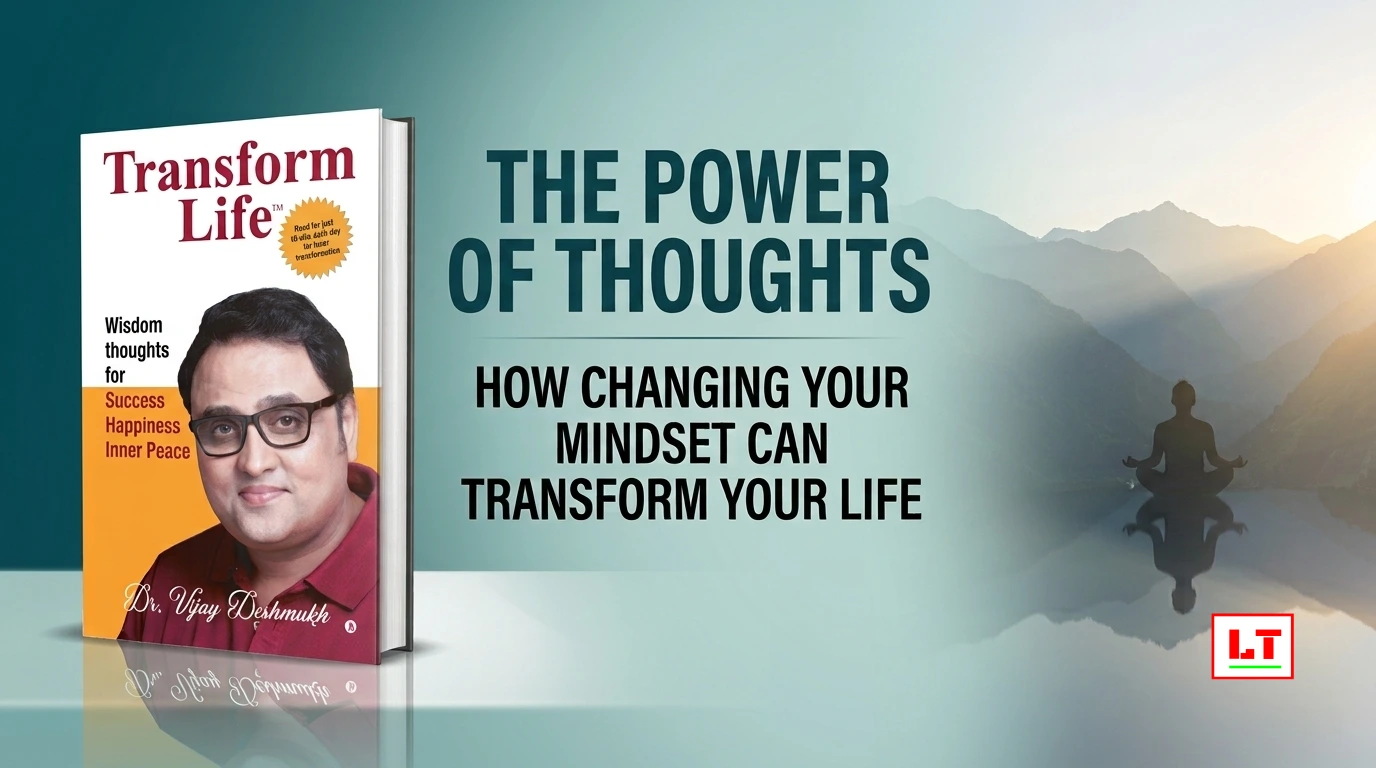
One book that explores this relationship in a simple yet profound manner is Transform Life: Wisdom Thoughts for Success Happiness Inner Peace by Dr. Vijay Deshmukh.
Dr. Deshmukh is an author, motivational speaker, life coach, and India’s leading implantologist. His decades of clinical experience, meditation practice, observation of human behaviour, and interest in scientific spirituality have shaped his approach to personal transformation. His writing focuses on simplifying complex questions of life and presenting wisdom in a form that readers can understand and apply.
Your Thoughts Influence the Direction of Your Life
Every person experiences thousands of thoughts throughout the day. Some thoughts encourage us. Others create fear. Some inspire action. Others make us doubt ourselves. The important point is not that negative thoughts should never occur. Negative thoughts are part of being human. The real challenge is allowing them to control our behaviour and define our identity.
For example, someone who repeatedly thinks, “I am not capable of doing this,” may gradually avoid opportunities. Another person facing the same challenge may think, “This is difficult, but I can learn.”
The circumstances may be identical, but the response is different. That difference in response can change the eventual outcome.
Positive Thinking Is More Than Staying Optimistic
Positive thinking is sometimes misunderstood as pretending that problems do not exist. It is not. A positive mindset does not deny difficulties. Instead, it changes the way we interpret and respond to them. A professional facing a career setback can either see it as proof of failure or as an opportunity to learn, adapt, and improve.
A person experiencing relationship difficulties can either remain trapped in blame or begin examining their own communication and behaviour. Positive thinking creates space between a problem and our reaction to it. That space is where better decisions become possible.
Visualization and the Mind
Visualization is another powerful concept associated with personal development. When individuals clearly imagine the kind of person they want to become, they begin creating a mental framework for their future actions. Visualization can be used to imagine:
- Achieving a professional goal.
- Speaking confidently.
- Managing a difficult situation calmly.
- Developing healthier relationships.
- Living with greater peace.
- Becoming more disciplined.
The purpose is not to simply imagine success and wait for it to happen. Visualization works best when it strengthens clarity, intention, and action. A clear mental picture can help individuals recognize the behaviours required to move toward their goals.
Meditation and Inner Transformation
Modern life provides endless external stimulation. Emails, notifications, social media, deadlines, conversations, responsibilities, and information continuously compete for our attention. Meditation offers an opportunity to turn attention inward.
Dr. Vijay Deshmukh’s approach places importance on meditation as a tool for self-observation and mental management. Regular meditation can encourage individuals to observe their thoughts rather than automatically react to every thought. This distinction is important.
You may experience anger without becoming an angry person. You may experience fear without allowing fear to determine your decision. You may experience stress without allowing stress to control your entire day. The ability to observe the mind creates greater inner awareness.
From Self-Awareness to Self-Transformation
Transformation begins with awareness. Before changing a habit, we need to recognize it. Before improving communication, we need to understand how we currently communicate. Before reducing stress, we need to identify what triggers it. Self-awareness therefore becomes the foundation of meaningful change.
Dr. Deshmukh’s writing encourages readers to look beyond superficial solutions and examine the deeper patterns influencing their lives. This approach makes personal transformation a continuous process rather than a one-time event.
Ancient Wisdom and Modern Life
One distinctive aspect of Transform Life is its connection between ancient wisdom and contemporary understanding. The book has been appreciated for its thought flow being greatly aligned with the teachings of the Shrimad Bhagwad Gita, while also presenting ideas relevant to modern life.
This combination makes the book particularly interesting for readers who want to explore spirituality without separating it from everyday responsibilities. The objective is not to escape modern life. It is to understand modern life better.
Success Without Inner Peace Is Incomplete
Professional success is valuable. Financial security matters. Recognition can be rewarding. But when achievement comes with continuous anxiety, broken relationships, poor health, or an absence of inner peace, an important question arises:
Can this really be called complete success?
The philosophy behind Transform Life encourages readers to look at success more holistically. Success can include:
- Meaningful work
- Healthy relationships
- Emotional stability
- Happiness
- Inner peace
- Personal growth
This broader definition can fundamentally change how people approach their goals.
The Importance of Repeated Reflection
One powerful feature of wisdom-based writing is that the same thought can create different insights at different stages of life. A sentence that appears simple today may become deeply meaningful after a personal experience several years later. This is why reflection matters. Reading, thinking, contemplating, and applying ideas repeatedly can gradually change our mental patterns. The transformation is often subtle. There may not be a single dramatic moment.
Instead, the person begins responding differently to situations that previously created confusion, fear, anger, or stress. That is meaningful transformation.
Why Transform Life Is Relevant Today
Modern society provides more information than ever before, yet many people still struggle with basic questions:
- What am I really trying to achieve?
- Why am I constantly stressed?
- What will make me genuinely happy?
- How can I control my thoughts?
- How can I find inner peace?
- What is the meaning of success?
Transform Life addresses these questions through short wisdom thoughts and practical philosophical insights. Its simple writing style makes complex ideas accessible to readers from different backgrounds.
A Practical Starting Point for Transformation
You do not need to transform your entire life overnight. Begin with one thought. Observe it. Question it. Understand it. Then choose a better response. Practice meditation. Develop awareness.Visualize the person you want to become. Take consistent action. Over time, these small changes can influence habits, decisions, relationships, and ultimately the direction of life.
Recommended Book
Transform Life: Wisdom Thoughts for Success Happiness Inner Peace
If you are looking for a thoughtful self-help book that explores personal transformation, positive thinking, meditation, visualization, success, happiness, and inner peace, Transform Life is worth exploring.
Conclusion
Transformation does not always begin with changing the world around us. Sometimes it begins with changing the way we see the world. Our thoughts influence our perceptions. Our perceptions influence our choices. Our choices shape our habits, and our habits gradually shape our lives.
The central message behind Dr. Vijay Deshmukh’s work is therefore highly relevant to modern readers: meaningful transformation requires looking inward while continuing to live responsibly in the external world.
When awareness, positive thinking, meditation, visualization, and purposeful action come together, success can become more than an achievement. It can become a journey toward happiness, fulfillment, and inner peace.
FAQs
How do thoughts influence personal transformation?
Thoughts influence emotions, decisions, and behaviour. Repeated constructive thinking can encourage healthier habits and more positive responses to life’s challenges.
Is Transform Life only a spiritual book?
No. The book combines ancient wisdom with modern perspectives and explores practical themes such as success, mind management, positive thinking, meditation, visualization, happiness, and inner peace.
Can meditation help with personal transformation?
Meditation can develop greater self-awareness and help individuals observe their thoughts and emotional reactions more consciously.
Who should read Transform Life?
It is suitable for anyone interested in self-improvement, personal transformation, success, happiness, positive thinking, and inner peace.
Inspiring Authors.
Fresh Perspectives.
Discover remarkable books, inspiring author stories, exclusive literary insights and fresh ideas delivered directly to your inbox.
