
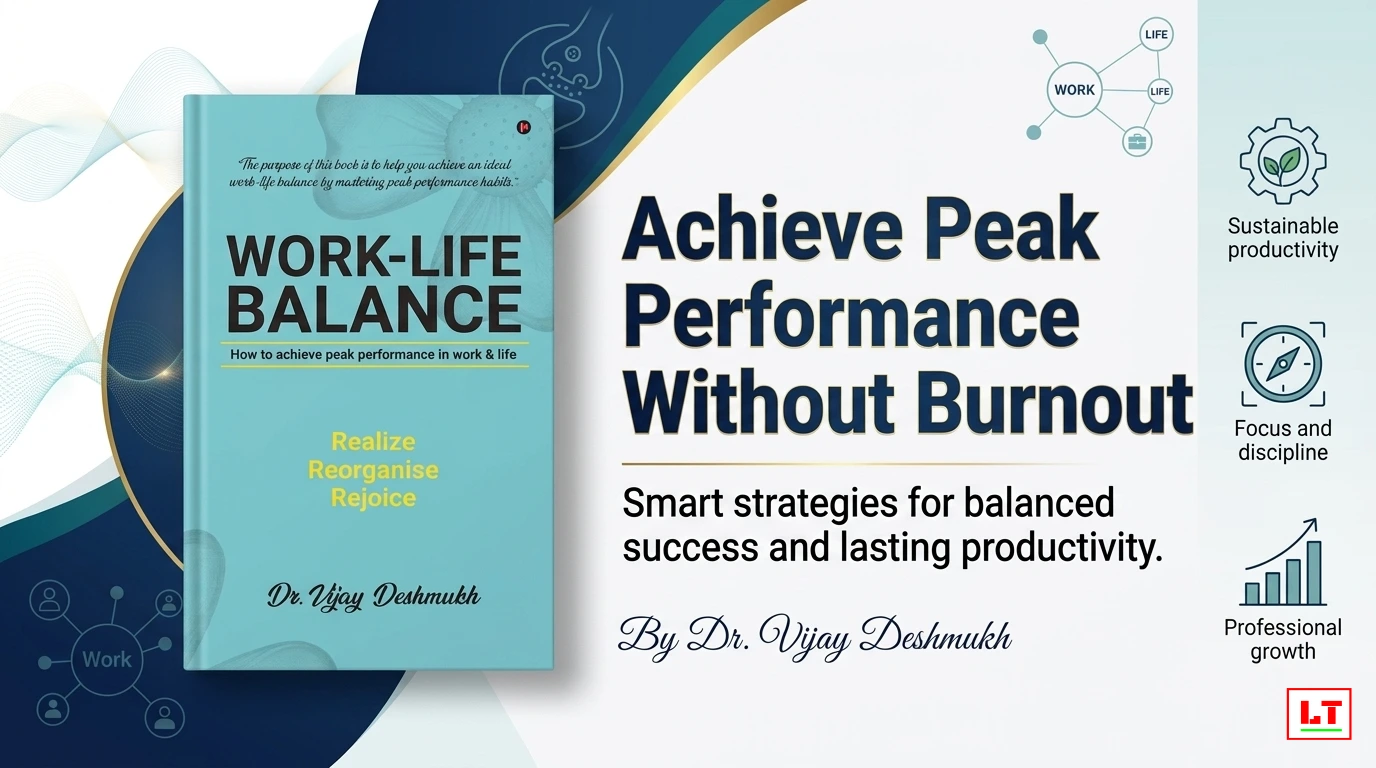
In today’s competitive world, professionals are constantly under pressure to perform better, achieve faster results, and stay ahead of others. While ambition and hard work are important, excessive pressure without balance often leads to stress, exhaustion, and burnout. Many people confuse peak performance with working continuously without rest. However, true peak performance is not about intensity alone—it is about sustainability, clarity, and intelligent energy management.
This important idea is explored deeply in Work Life Balance: How to Achieve Peak Performance in Work and Life by Dr. Vijay Deshmukh. The book offers a practical roadmap for individuals who want to succeed professionally while maintaining emotional stability, mental peace, and healthy relationships.
Understanding Modern Burnout
Burnout is becoming increasingly common among professionals across industries. It often begins gradually through:
- Continuous stress
- Lack of recovery time
- Emotional exhaustion
- Poor work-life balance
- Unstructured routines
Many individuals continue functioning despite feeling mentally and emotionally drained. Over time, this affects performance, motivation, and overall well-being. The book explains that burnout is not caused only by workload—it is caused by imbalance.
Why Hard Work Alone Is Not Enough
One of the strongest messages in the book is that hard work without clarity can become destructive. Many professionals spend years chasing success but eventually feel disconnected, exhausted, and emotionally drained. According to the book, sustainable success requires:
- Structured thinking
- Emotional balance
- Focused productivity
- Time management
- Inner stability
This balanced approach helps individuals achieve consistent results without sacrificing health and happiness.
The Importance of Mental Clarity
Mental clarity plays a major role in peak performance. When the mind is overloaded with stress and distractions:
- Decision-making weakens
- Productivity declines
- Focus reduces
- Emotional reactions increase
The book emphasizes the importance of simplifying life and organizing priorities clearly. A calm and disciplined mind naturally performs better.
Learning Through the Story of Rajan and Tina
The book presents its ideas through the relatable story of Rajan and Tina, an ambitious corporate couple working in an MNC. Like many modern professionals, they struggle with:
- Long work hours
- Relationship challenges
- Emotional stress
- Lack of balance
As they begin understanding the principles of balanced living and structured routines, their lives gradually improve. This storytelling format makes the lessons practical and emotionally engaging for readers.
The Power of Structured Living
A major theme of the book is structured living. Many people experience stress because their lives lack organization and balance. Without proper structure, responsibilities overlap and create confusion. The book recommends:
- Prioritizing important tasks
- Dividing time intelligently
- Maintaining healthy routines
- Creating clear boundaries
- Practicing mindfulness
These habits improve productivity while reducing mental overload.
Managing Different Time Zones of Life
One of the most unique concepts introduced in the book is the idea of managing different “time zones” of life. According to Dr. Vijay Deshmukh, life should be divided into multiple important areas:
- Professional time
- Family time
- Personal time
- Social time
- Spiritual time
Each area requires attention and balance. When individuals consciously allocate time to these zones, they experience greater emotional stability and improved productivity.
Meditation and Emotional Stability
The book also highlights the importance of meditation and mindfulness. Meditation is presented not just as a spiritual practice but as a practical method for improving:
- Mental clarity
- Emotional control
- Focus
- Stress management
- Decision-making
Even a few minutes of daily mindfulness can significantly improve overall well-being and productivity.
Peak Performance Through Balance
One of the biggest misconceptions in modern work culture is that burnout is necessary for success. The book strongly challenges this belief. True peak performance comes from:
- Consistent energy
- Clear thinking
- Emotional balance
- Disciplined routines
- Sustainable habits
When professionals maintain inner stability, they naturally perform better over long periods.
Why This Book Is Relevant Today
The lessons shared in the book are highly relevant for today’s fast-paced environment. It is especially useful for:
- Corporate professionals
- Entrepreneurs
- Managers and executives
- Working couples
- Students facing stress and pressure
The simple writing style and practical advice make the book easy to understand and implement.
Conclusion
Modern success should not come at the cost of peace, health, or happiness. Work Life Balance: How to Achieve Peak Performance in Work and Life offers a powerful reminder that balanced living creates sustainable growth.
The book teaches readers that:
👉 Productivity improves when the mind is calm
👉 Structured living reduces stress
👉 Balance creates long-term success
For anyone looking to perform better without experiencing burnout, this book provides practical and meaningful guidance.
FAQs
What is the core focus of the book?
The book focuses on work-life balance, stress management, and achieving peak performance sustainably.
Is the book useful for professionals?
Yes, it is highly relevant for professionals dealing with stress, workload pressure, and burnout.
Does the book include practical techniques?
Yes, it covers practical methods related to mindfulness, productivity, time management, and emotional balance.
Who should read this book?
Corporate employees, entrepreneurs, managers, students, and anyone seeking a balanced and successful life.
Inspiring Authors.
Fresh Perspectives.
Discover remarkable books, inspiring author stories, exclusive literary insights and fresh ideas delivered directly to your inbox.
