
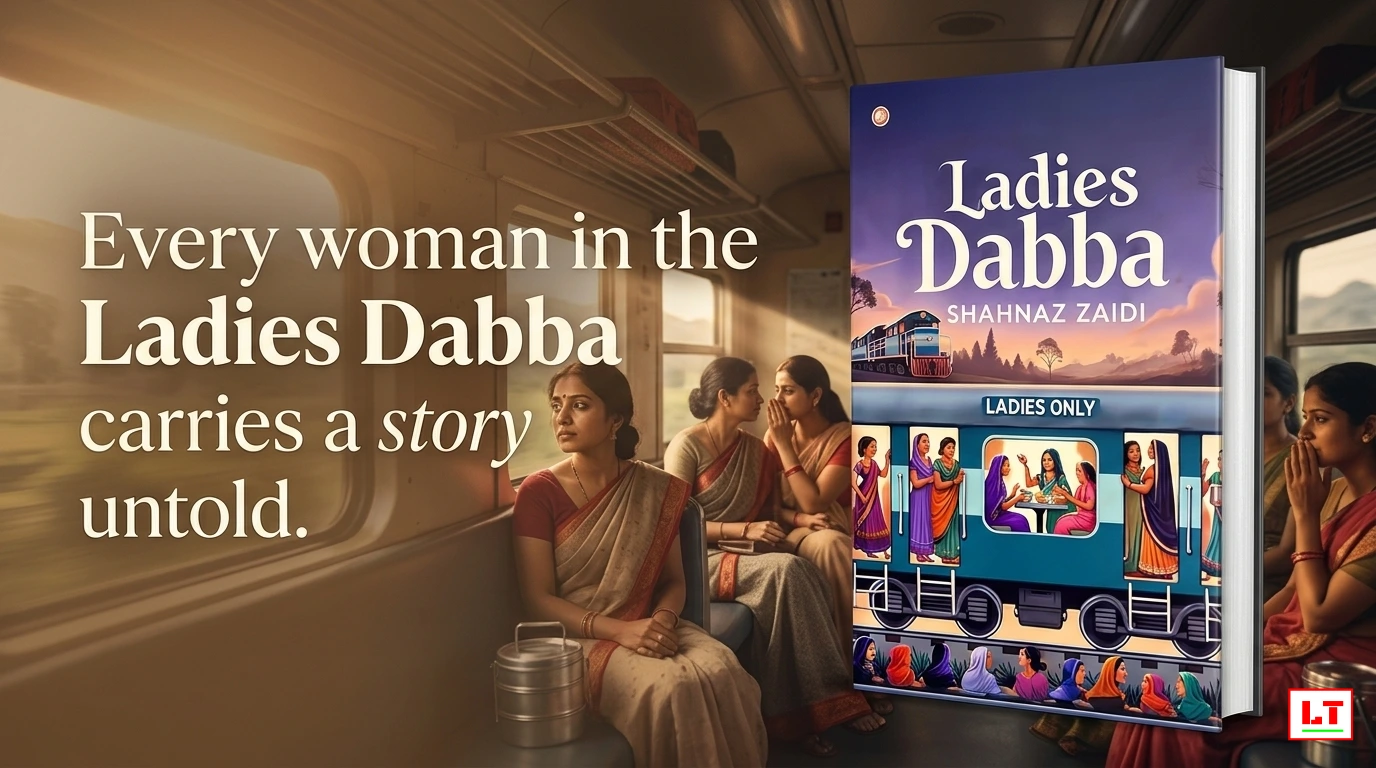
Books that emerge from real human experiences often leave the deepest impact on readers. Ladies Dabba by Shahnaz Zaidi is one such novel that transforms an ordinary train journey into an emotional and psychological exploration of people, relationships, and hidden truths.
Through layered characters and realistic storytelling, the novel reflects the complexities of women’s lives, choices, and silent struggles. What makes the book memorable is its emotional honesty and ability to turn everyday moments into meaningful reflections on society.
In this insightful interview, author Shahnaz Zaidi opens up about her creative process, the emotional depth behind her characters, and the importance of authentic storytelling in today’s literary world.
Interview with Shahnaz Zaidi
1. How would you describe Ladies Dabba in a single sentence?
Answer by Shahnaz Zaidi:
I would describe Ladies Dabba as an emotional journey through the hidden realities of human lives and relationships. The story uses a train compartment as a lens to explore deeper social and psychological themes. It is not only about travel but also about emotional movement, personal struggles, and human connection. Every character represents a different experience of life, making the journey meaningful on multiple levels.
2. What drew you toward women-centric storytelling?
Answer by Shahnaz Zaidi:
Women’s stories often carry emotional depth that remains unexplored in everyday conversations. I have always been interested in understanding the silent resilience, struggles, and emotional strength of women. Shared spaces like a Ladies Dabba create a unique environment where these experiences naturally emerge. I wanted to highlight not just suffering, but also empathy, courage, and survival. Women-centric storytelling allows me to explore society through deeply personal perspectives.
3. How do you build emotionally realistic characters?
Answer by Shahnaz Zaidi:
I begin by understanding the emotional history of each character rather than focusing only on their actions. Every person behaves differently because of past experiences, fears, and desires. I spend time imagining their emotional world and motivations before writing scenes. Observation also plays a major role because real emotions are often subtle. Small details, pauses, and reactions can make a character feel authentic and relatable to readers.
4. Was there a specific moment when you realized this story needed to be written?
Answer by Shahnaz Zaidi:
Yes, there were many moments during train journeys where I observed strangers sharing unexpected emotional honesty. Sometimes people reveal more to strangers than they do to family members. I found those temporary yet meaningful interactions fascinating. Gradually, I realized these moments represented larger truths about society and human behavior. That realization stayed with me and eventually became the foundation for Ladies Dabba.
5. What role does society play in shaping the characters of your novel?
Answer by Shahnaz Zaidi:
Society influences every character in the story, whether through expectations, pressure, judgment, or opportunities. Many of the decisions made by the characters are shaped by social realities rather than personal desires alone. I wanted readers to understand how circumstances often affect human choices. The novel reflects both the visible and invisible ways society impacts women’s lives. At the same time, it also highlights individual resilience within those realities.
6. How do you maintain emotional balance while writing intense scenes?
Answer by Shahnaz Zaidi:
Writing emotionally intense scenes requires sensitivity and restraint. I try not to over-dramatize emotions because realism creates stronger impact. Instead of forcing emotion, I focus on honest reactions and meaningful details. Sometimes silence can communicate more than long explanations. I also take breaks while writing emotionally heavy sections because it is important to maintain clarity and emotional balance as a storyteller.
7. What do you hope readers feel after finishing the book?
Answer by Shahnaz Zaidi:
I hope readers feel emotionally connected to the characters and reflective about life itself. I want them to think about the hidden stories people carry and the importance of empathy. The book encourages readers to look beyond appearances and understand human vulnerability. If readers finish the story with greater emotional awareness and compassion, I would consider that deeply meaningful as an author.
8. How important is observation for a writer?
Answer by Shahnaz Zaidi:
Observation is one of the most important tools for any writer. Stories are everywhere if we truly pay attention to people and emotions around us. Human behavior, conversations, expressions, and silence can inspire meaningful narratives. I believe observation helps writers create authenticity because real life contains emotional details that imagination alone may not capture. Good storytelling often begins with careful listening and genuine curiosity about people.
9. What role does simplicity play in your writing style?
Answer by Shahnaz Zaidi:
I believe simplicity makes storytelling more powerful and accessible. A simple narrative allows emotions and characters to stand out naturally. I do not believe complexity alone creates depth. Readers connect more strongly when they can emotionally enter the story without feeling overwhelmed. Simplicity also creates honesty in writing, which is something I value deeply as an author. Clear storytelling can still carry profound meaning.
10. What are your thoughts on book promotion and author visibility today?
Answer by Shahnaz Zaidi:
Book promotion has become extremely important in today’s publishing landscape because even meaningful stories need visibility to reach readers. Authors today must think beyond writing and focus on connecting with audiences. Platforms like Amazon, Goodreads, and digital media create opportunities for wider reach. At the same time, authenticity should remain central to promotion. Visibility is important, but genuine reader connection is what ultimately creates lasting impact for an author.
