
Every system is human at its core, and that is where stories begin.
Introduction to the Interview
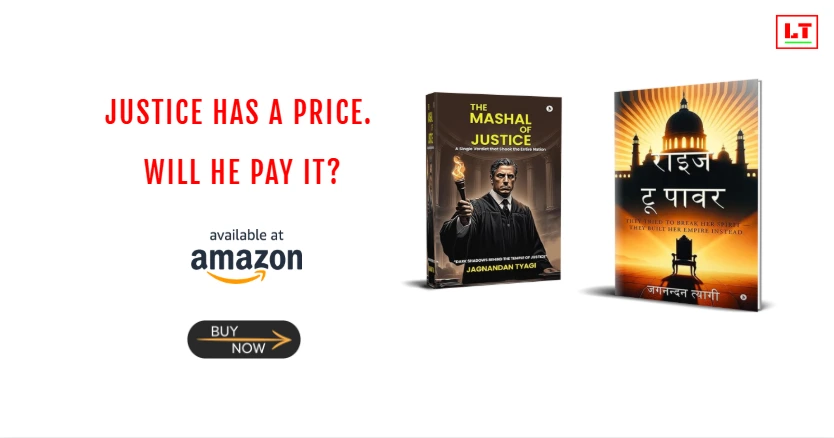
In this Jagnandan Tyagi interview, the author discusses the creative philosophy behind The Mashal of Justice, his interest in political systems, and why moral responsibility drives his narratives. He explains how one verdict becomes the starting point for a larger social and political reckoning, and why he prefers focusing on consequences rather than courtroom spectacle.
Interview Questions and Answers
Q: What philosophical idea anchors The Mashal of Justice?
Answered by Jagnandan Tyagi:
The novel is built around responsibility. I wanted to examine how far a person’s duty extends once their decision changes public life. The judge is torn between legal obligation, family loyalty, and personal conscience. Those tensions felt more compelling than simple right-versus-wrong conflicts. They mirror the pressures people face inside real institutions.
Q: Why focus on consequences instead of courtroom theatrics?
Answered by Jagnandan Tyagi:
Courtroom scenes often suggest closure, but reality is far messier. I wanted the ruling to function as a spark rather than an ending. What interested me was how systems react when stability is disrupted. The political, administrative, and social aftershocks become the true narrative engine.
Q: How did you approach writing political pressure?
Answered by Jagnandan Tyagi:
Pressure usually begins politely, through meetings, suggestions, and friendly warnings. Over time it hardens into implied threats or tempting offers. I tried to capture that gradual escalation. It feels more authentic than immediate confrontation and reflects how influence often works behind closed doors.
Q: Why make the family a central battleground?
Answered by Jagnandan Tyagi:
Public opposition is expected in such situations. Private persuasion is far more painful. When loved ones argue for compromise, they frame it as protection or opportunity. That emotional proximity makes the decision harder and exposes how power infiltrates even domestic spaces.
Q: Why publish the book bilingually?
Answered by Jagnandan Tyagi:
Questions of justice and accountability are universal. I wanted readers from different linguistic communities to engage with the same dilemmas. Publishing in English and Hindi allowed the story to reach broader audiences without diluting its message. Language should expand discussion, not restrict it.
Q: How does Rise to Power complement this novel?
Answered by Jagnandan Tyagi:
Rise to Power explores ambition before someone gains authority. This novel examines what happens once that authority is tested. Together they form two sides of a conversation about power. One focuses on ascent, the other on consequence and reckoning.
Q: Did contemporary events influence the tone?
Answered by Jagnandan Tyagi:
They influenced the atmosphere rather than specific plot points. I observed general patterns in institutional behavior and public reaction. Those impressions shaped the realism of the story. The narrative itself remains fictional while reflecting recognizable dynamics.
Q: What emotions do you hope readers experience?
Answered by Jagnandan Tyagi:
I hope readers feel unsettled in a thoughtful way. The goal is reflection rather than comfort. I want them to question what lines they might refuse to cross. That self-examination is more important than delivering neat resolutions.
Q: What role do administrators play in the narrative?
Answered by Jagnandan Tyagi:
Administrators sit between law and politics, where neutrality is difficult to maintain. Their decisions appear technical but carry moral weight. I used them to show how ordinary professionals become part of extraordinary situations. They reveal how systems operate from the inside.
Q: What advice would you give aspiring political-fiction writers?
Answered by Jagnandan Tyagi:
Avoid turning systems into caricatures. Institutions are made of people, and people are complicated. Focus on pressure, uncertainty, and gradual compromise. Those elements create realism and lasting tension in political storytelling.
What Readers Say About the Interview
The interview clarified the novel’s ethical complexity.
Suresh Nair
Thoughtful and grounded responses.
Pallavi Joshi
A serious voice in political fiction.
Manoj Kulkarni
This conversation made me curious about his full body of work.
Divya Arora
Frequently Asked Questions
Is the novel inspired by real events?
It reflects institutional patterns rather than specific cases.
Does the interview contain spoilers?
No, it focuses on themes and craft.
What themes dominate Tyagi’s writing?
Integrity, ambition, responsibility, and systemic pressure.
Where is the book available?
Through major online retailers and bookstores.
